
Homegrown fast-moving consumer goods (FMCG) major Dabur India is set to record low single-digit growth in consolidated revenue in the December quarter, it said in an update on Friday. The maker of Hajmola candy and Real fruit juice said rural consumption continued to be resilient and grow faster than urban in the third quarter.
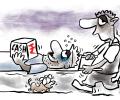
Since January 2021, the inflation rate in health has stood in the range of 6.08-8.44 per cent.

India now has 284 billionaires, 13 more than last year, maintaining its position as the third-largest dollar-billionaire hub globally, after the US and China.

From the 30-share Sensex pack, UltraTech Cement, JSW Steel, Adani Ports, Tech Mahindra, Titan, Maruti, Mahindra & Mahindra, Tata Steel and Reliance Industries were the biggest gainers. NTPC, Hindustan Unilever, Kotak Mahindra Bank, IndusInd Bank and Larsen & Toubro were among the laggards.

The transaction is an all equity merger with 4.39 shares of HUL being allotted for every share in GlaxoSmithKline Consumer Healthcare India
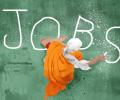
Bengaluru dominated as the country's top city for job opportunities and salary growth as it has registered a 9.3 per cent year-on-year increase, closely followed by Chennai and Delhi, a report said on Thursday. This growth underlines Bengaluru's reputation as a technology and business hub as the average monthly unified salary in the city stood at Rs 29,500, making it the highest-paying city in the country, according to TeamLease Services Jobs and Salaries Primer report for FY24. The report is based on an analysis of unified salaries across temporary and permanent hiring markets.

Market reaction to the Union Budget was overall neutral. The income tax "gift" wasn't enough to move the needle. There was some apparent rationalisation of Customs duty structure as well as cuts on import duties of some key components for the telecom and IT industry and duty cuts on vehicle imports. Other proposals related to development of agriculture and rural economy and renewables seem to be generally positive.
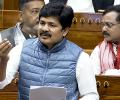
A strong demand was made in the Lok Sabha to eliminate online betting and gambling applications. YSRCP member Maddila Gurumoorthy urged the government to set up a dedicated task force to take action against betting and gambling apps. He also asked the government to draft regulations for such applications and launch awareness campaigns about the dangers of online betting. Other issues raised included deposit insurance coverage for bank depositors, representation of Scheduled Castes in the Kerala government, challenges faced by nurses, and the need for paramilitary forces in Jharkhand during upcoming Hindu festivals.

Benchmark BSE Sensex tanked 824 points to settle at a fresh seven-month low on Monday following heavy selling in IT and oil & gas shares amid weak global trends. The 30-share BSE barometer plunged by 824.29 points or 1.08 per cent to close at 75,366.17 with 23 of its constituents ending lower and seven with gains. During the day the index moved between a high of 75,925.72 and a low of 75,267.59.

the largest transactions of the year include the merger of Quality Care India and Aster DM Healthcare valued at $5.08 billion, followed by Bharti Enterprises' acquisition of a 24.5 per cent stake in the BT Group at $4.08 billion, and a family settlement transaction in the Godrej family at $3.5 billion.

Anmol Singh Jaggi and Puneet Singh Jaggi, once hailed as rising stars in India's clean energy sector, are now facing serious regulatory action.
White-collar hiring activity in December witnessed a 9 per cent increase compared to the same period of the previous year, driven by high-skill and strategic roles, a report said on Thursday. According to Naukri JobSpeak, the index reached an impressive 2,651 points in December 2024, reflecting a robust 9 per cent year-on-year growth, a promising sign for the year ahead.

From the 30-share pack, Hindustan Unilever, Tata Motors, Axis Bank, Nestle India, Asian Paints, ITC, Reliance Industries, Mahindra & Mahindra, IndusInd Bank and State Bank of India were among the laggards. Larsen & Toubro, Tata Steel, JSW Steel, HDFC Bank, Adani Ports, Kotak Mahindra Bank, Bharti Airtel and PowerGrid were among the gainers.

The report analysed product launches of 2011, their success over three years, and reported 31 of the 14,509 products introduced that year were received well by consumers.

Open offer to increase holding to 75%, fails to enthuse institutional investors.

India witnessed a record-breaking surge in deal activity in February, with 226 M&A and private equity deals totaling $7.2 billion -- the highest monthly deal volume in the last three years, according to the Dealtracker report of Grant Thornton Bharat. "This represents a 67 per cent increase in volumes and a 5.4-fold increase in values compared to February 2024, while a 14 per cent increase over the previous month," it said.

The sensitivity segment has quadrupled in the past two years, due to the aggressive marketing effort of both GSK and Colgate.

Brokerages expect a further slowdown in Indian firms' revenue and earnings growth in Q4FY25, following low single-digit growth in the preceding three quarters, as factors like weak consumer demand and credit growth linger on.

The stocks of diagnostic service providers have been standout performers within the healthcare sector over the past year, posting returns between 16 and 80 per cent. In comparison, the Nifty 50 saw returns of 8 per cent. Stable pricing, expectations of gradual volume growth, and market share expansion for the larger players have stoked increased optimism for listed companies.

Recent reports of heart attacks occurring while dancing, driving, or even walking have raised concerns about the condition's unpredictability. Experts emphasize the importance of regular health check-ups to detect underlying heart diseases and prevent sudden cardiac events. Factors contributing to the rise include unhealthy lifestyles, genetic predisposition, and inadequate sleep. The article highlights the need for increased public awareness and stricter implementation of government programs to address the growing trend of heart attacks, particularly among younger individuals.
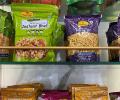
Temasek is nearing a deal to acquire a 10% per cent stake in Haldiram Snacks Foods, valued at $10 billion.

Fresh meat and seafood delivery unicorn Licious is intensifying its talent acquisition endeavours as it pursues profitability and readies for an initial public offering (IPO) within the next 24 months. Delightful Gourmet, Licious' parent company, has named 39-year-old Karishma Gupta as its new chief financial officer (CFO). Her appointment aligns with Licious' drive for profitable growth through an omnichannel strategy.

From the 30-share Sensex blue-chip pack, Titan, Adani Ports, UltraTech Cement, Tata Consultancy Services, NTPC, Bharti Airtel, Tech Mahindra, Infosys, Hindustan Unilever and JSW Steel were the biggest laggards.

Nirma's tryst with the pharmaceutical space started in 2006 when it acquired the ailing Core Healthcare in a deal reported to be worth Rs 300 crore. The Ahmedabad-based manufacturer of intravenous fluids was subsequently renamed Nirlife. Pharma industry insiders say Nirma, which broke open the detergent market in the 1990s with low prices and massive advertising, tried an encore of the low-price strategy in pharma, but with mixed results.

The most scathing criticism came from Dr. Cyriac Abby Phillips, a Indian hepatologist and social media influencer known as 'The Liver Doc' on X.

Finance Minister (FM) Nirmala Sitharaman has presented a forward-looking Budget, reinforcing the government's commitment to 'Reform, Perform, and Transform'.

Indian drugmakers supply 47 per cent of the generic medicine requirements in the US, and tariffs would have increased prices in the US domestic market for patients, who are already dealing with drug shortages.

With over 45 healthcare facilities and over 300 vibrant diagnostic centres, Fortis is India's second-largest hospital chain -- next only to Apollo, which has 64 hospitals with 10,000 beds. Therefore, any international or domestic hospital chain that buys Fortis will simply catapult to the numero uno position.

From the 30 blue-chip pack, Mahindra & Mahindra, IndusInd Bank, Bajaj Finance, Tata Motors, Bajaj Finserv, Nestle and ICICI Bank were the biggest gainers. State Bank of India, Tata Steel, Adani Ports, Zomato, UltraTech Cement and HCL Tech were among the laggards.

S&P Global Ratings on Wednesday said the impact of the US reciprocal tariff will be limited on India as the economy is domestically oriented with less reliance on exports. YeeFarn Phua, Director, Sovereigns and International Public Finance Ratings, Asia-Pacific S&P Global also said India will clock a 6.7-6.8 per cent GDP growth over the next two years.

'It won't be a V-shaped recovery. It'll be consolidation.' 'Investors might exit during that grind. It'll be painful.'
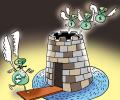
Foreign portfolio investors (FPIs) withdrew Rs 14,790 crore ($1.8 billion) from financial stocks in the first half of August, driven by global risk aversion sparked by US recession fears. Additional factors contributing to the decline in banking stocks included subdued earnings growth in the June quarter, concerns about slowing deposit growth, and stricter liquidity norms imposed by the Reserve Bank of India.

MNC funds invest in companies where foreign promoters have more than 50 per cent shareholding.
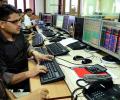
Among the Sensex firms, Titan, Asian Paints, ITC, Hindustan Unilever, Nestle India, Bajaj Finserv and Bharti Airtel were among the gainers. In contrast, UltraTech Cement, Tech Mahindra, Tata Steel, Power Grid, HDFC Bank, HCL Technology, State Bank of India and ICICI Bank were the laggards.
Benchmark Sensex advanced 110 points in a choppy trade on Wednesday, extending its gains to the fourth day in a row helped by buying in HDFC Bank, ICICI Bank and fresh foreign fund inflows. The 30-share barometer rose by 110.58 points or 0.14 per cent to settle at 80,956.33 with 14 of its constituents ending with gains and 16 stocks with losses. During the day, it jumped 399.64 points or 0.49 per cent to 81,245.39 and dipped to a low of 80,630.53.

'Along with Blackstone, we would be keen to look at opportunities in the North.'
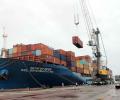
Industry associations and companies in the United States, including the US Chamber of Commerce, Coalition of Services Industries and the iconic bike company Harley Davidson have called on the Donald Trump dispensation to push India to reduce tariffs, non-tariffs, and regulatory barriers to boost American exports.

'Expect India to keep doing well irrespective of geopolitics.'

Unfazed by protesters shouting "Shame on you!", Trump and Republicans celebrated after the bill passed the 216-vote threshold, with just one vote to spare

According to a customer experience study by networking solutions provider Cisco, 88 per cent of the Indians surveyed are comfortable with interacting with their doctors virtually instead of meeting them in person.
